You Can’t Fix What You Can’t Measure
Many municipalities know they have water loss problems.
But identifying where that loss is occurring, and how severe it really is, is often the biggest challenge.
Without accurate data, utilities may:
- Miss hidden leaks
- Lose billable revenue
- Waste energy and treatment costs
- Delay critical infrastructure improvements
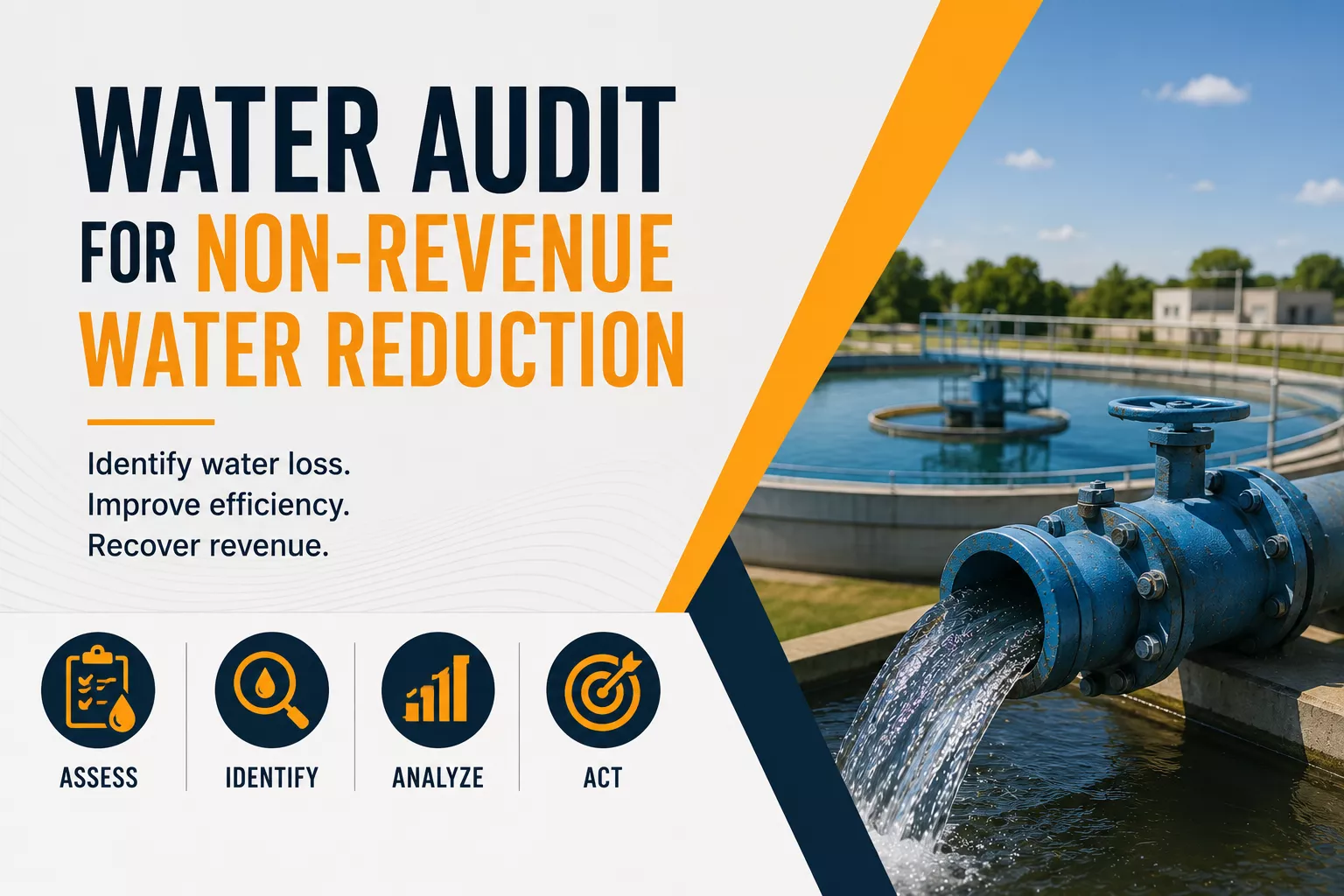
That’s why a proper water audit for non-revenue water reduction is one of the most important first steps any municipality can take.
What Is A Water Audit?
A water audit is a structured analysis of how water moves through a utility system from production to customer billing.
The goal is simple:
Identify where water is being lost, mismeasured, or unaccounted for.
Most municipalities follow the methodology developed by the American Water Works Association, which breaks non-revenue water into categories such as:
Real Losses
Physical water losses caused by:
- Underground leaks
- Main breaks
- Tank overflows
- Pressure-related failures
Apparent Losses
Water that is consumed but not properly measured or billed due to:
- Meter inaccuracies
- Data handling errors
- Unauthorized consumption
Authorized Unbilled Consumption
Water used legitimately but not billed, such as:
- Firefighting
- Main flushing
- Public facility usage
The Benefits of Conducting a Water Audit
A comprehensive water audit does far more than identify leaks.
It provides municipalities with a roadmap for improving operational efficiency, recovering revenue, and planning future infrastructure investments.
1. Revenue Recovery
Many utilities discover they are losing substantial revenue due to inaccurate metering or hidden system losses.
By identifying these issues early, municipalities can increase billable water without increasing production.
2. Reduced Operational Costs
Every gallon of lost water represents wasted:
- Energy
- Chemicals
- Treatment resources
- Labor
Reducing non-revenue water helps utilities operate more efficiently while lowering overall system costs.
3. Better Infrastructure Planning
Water audits provide valuable system data that helps municipalities prioritize:
- Pipe replacement projects
- Pressure management initiatives
- Leak detection programs
- Smart monitoring upgrades
4. Stronger Grant & Funding Opportunities
Many state and federal infrastructure programs require utilities to demonstrate:
- System need
- Efficiency planning
- Water conservation efforts
A documented water audit can strengthen funding applications and support long-term capital planning.
How to Conduct a Water Audit
While every utility system is different, most successful audits follow a similar process.
Step 1: Gather System Data
Collect information including:
- Water production volumes
- Customer billing records
- Meter data
- Pressure readings
- Operational usage records
The accuracy of this data is critical to producing meaningful audit results.
Step 2: Calculate Water Balance
Utilities compare:
- Total system input volume
vs. - Authorized consumption
The difference represents non-revenue water.
This calculation helps determine whether losses are primarily physical, apparent, or administrative.
Step 3: Identify High-Loss Areas
Once losses are quantified, utilities can begin identifying:
- Leak-prone zones
- Pressure issues
- Metering inaccuracies
- Infrastructure weaknesses
Many municipalities use:
- Acoustic leak detection
- District Metered Areas (DMAs)
- Smart monitoring systems
- Pressure management tools
to pinpoint problem areas more effectively.
Step 4: Develop an NRW Reduction Strategy
The audit should lead directly into an action plan focused on:
- Revenue recovery
- Infrastructure improvements
- Leak reduction
- Operational optimization
This allows municipalities to prioritize projects with the greatest potential ROI.
Turn Water Data Into Measurable Results
At Holistic Utility Solutions, we help municipalities identify and reduce non-revenue water through strategic assessments, infrastructure analysis, and efficiency-driven solutions.
Our approach combines:
- Water system evaluations
- NRW reduction planning
- Operational efficiency strategies
- Funding guidance
- Infrastructure modernization support
Whether your municipality is just beginning its NRW journey or looking to improve existing programs, our team can help you develop a practical, results-driven strategy.
Contact Holistic Utility Solutions to learn how a water audit can help your municipality recover lost revenue and improve system performance.
Non-revenue water is more than a technical issue, it’s a financial and operational challenge that impacts the long-term sustainability of municipal water systems.
A well-executed water audit provides the visibility needed to:
- Reduce water loss
- Improve efficiency
- Recover revenue
- Strengthen infrastructure planning
The sooner municipalities understand where losses are occurring, the faster they can begin turning those losses into measurable improvements.