
Overview
Holistic Utility Solutions developed a solar master plan for the Maryland-National Capital Park and Planning Commission to evaluate renewable energy opportunities across multiple public facilities.
The organization manages a large portfolio of parks and government buildings and leadership wanted to determine how solar generation could reduce long-term operating expenses while supporting their sustainability goal of doubling the organization’s solar production over the next 5 years.
The objective of the solar master plan was to evaluate site compatibility, estimate project costs, and develop a long-term strategy for expanding solar generation across the portfolio.
Progress
Holistic Utility Solutions began the solar master plan by conducting site evaluations and gathering facility data for multiple park and recreation properties.
Initially, the analysis focused on two locations. However, after reviewing the preliminary results, the client expanded the project to include an additional nine sites.
During the evaluation, the team reviewed:
- Facility energy consumption data
- Roof and site compatibility for solar installations
- Structural considerations for solar systems
- Potential solar production at each location
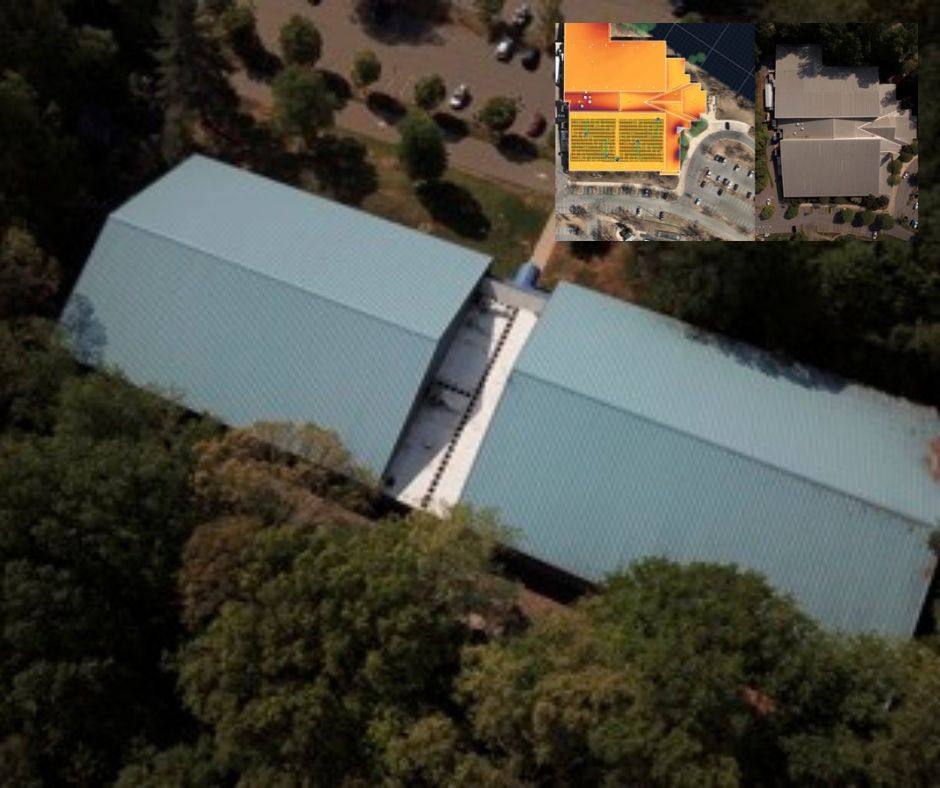
In addition, Holistic coordinated with solar contractors to develop preliminary layouts and cost estimates for the proposed installations.
Solution
The solar master plan analyzed several possible installation approaches across the property portfolio.
The study evaluated multiple solar deployment options, including:
- Rooftop solar systems on existing buildings
- Solar parking canopy structures
- Ground-mounted solar arrays
Holistic also developed financial models to estimate energy savings and long-term project performance.
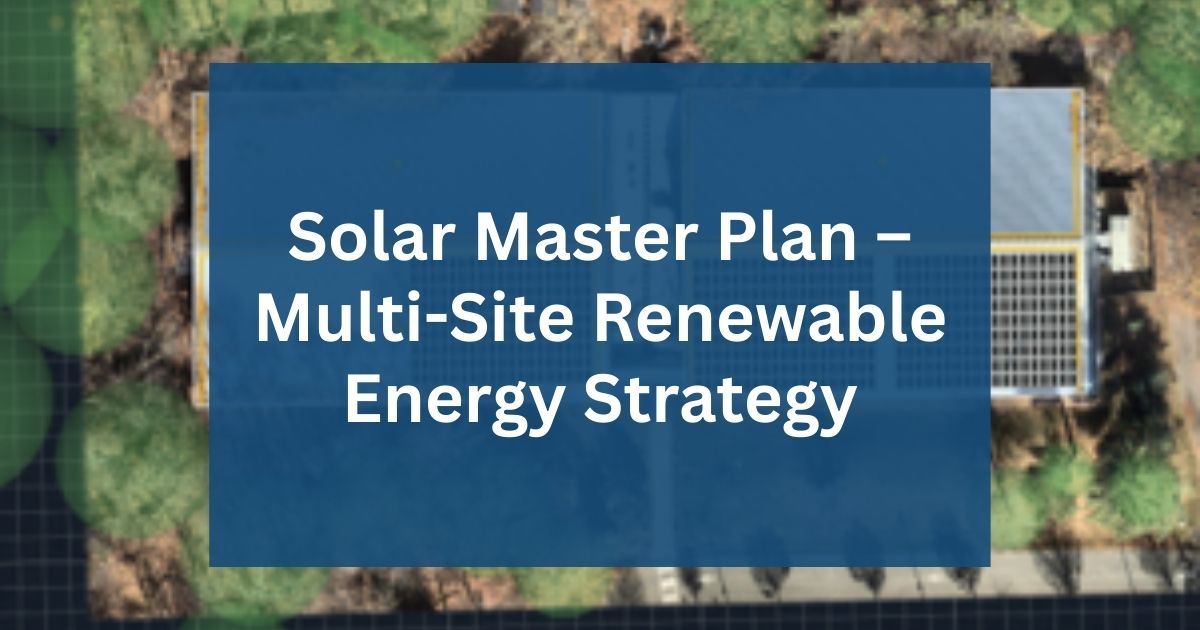
Each site evaluation included preliminary layouts, estimated installation costs, and expected solar production.
The analysis allowed the organization to compare different solar deployment strategies and prioritize the most promising projects.
Result
The completed solar master plan provided the organization with a clear roadmap for expanding renewable energy across its facilities.
Key outcomes included:
- Evaluation of solar potential across multiple sites
- Preliminary layouts for rooftop, canopy, and ground solar systems
- Cost estimates for future project development
- Financial analysis of potential energy savings
The study ultimately evaluated approximately 10 megawatts of potential solar capacity across the portfolio and provided a prioritized ranking of the top 3.4MW required to meet the 5-year goal while achieving strong financial return on investment.
With this information, leadership can now prioritize future solar investments and implement projects in a phased approach.
This project demonstrates how a comprehensive solar master plan can help large organizations develop long-term renewable energy strategies while reducing operational costs.