Overview
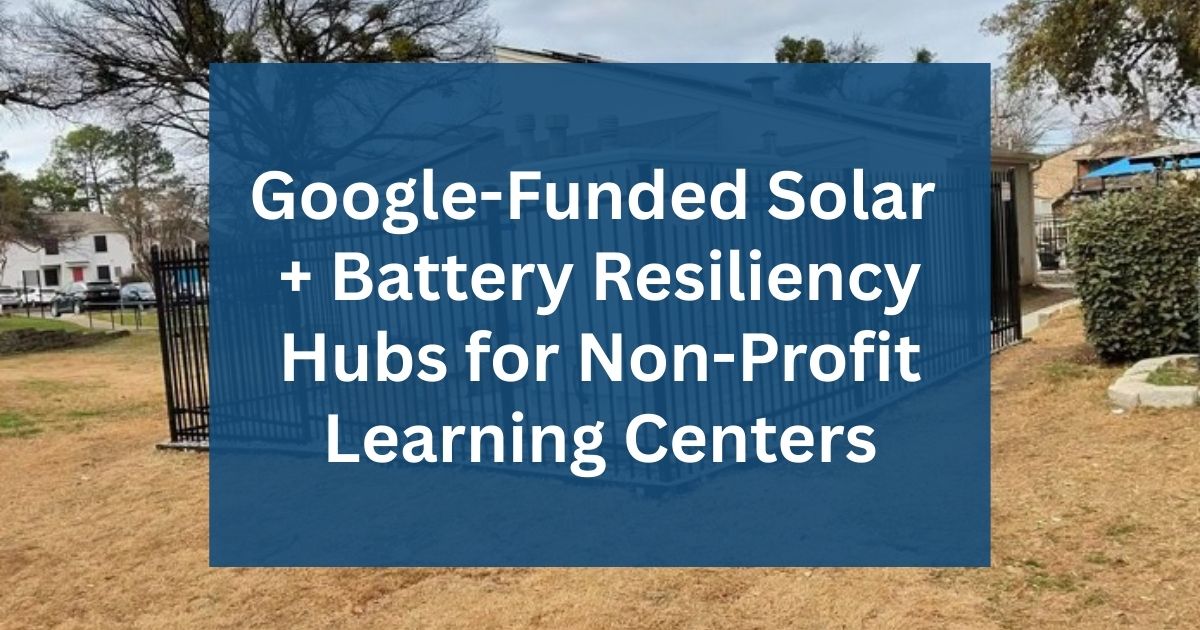
Google, in partnership with the Texas Energy Poverty Research Institute (TEPRI), funded a $1M grant for Resiliency Hubs at two (2) Foundation Communities projects in Arlington, TX. Holistic Utility Solutions was selected via competitive RFP and delivered turnkey design and construction for the systems.
Background
As grid outages become an increasing concern, especially for low-income residents, non-profits such as TEPRI and Foundation Communities are looking for ways to serve communities while also helping the larger grid.
TEPRI issued a competitive RFP to the leading solar design and construction companies throughout Texas. Holistic was selected from a pool of strong competitors due to their deep knowledge of the Texas energy market and proven track record of success on Commercial & Industrial projects.
Solution
Working off of the concept provided by the customer, Holistic completed both design and construction of the system.
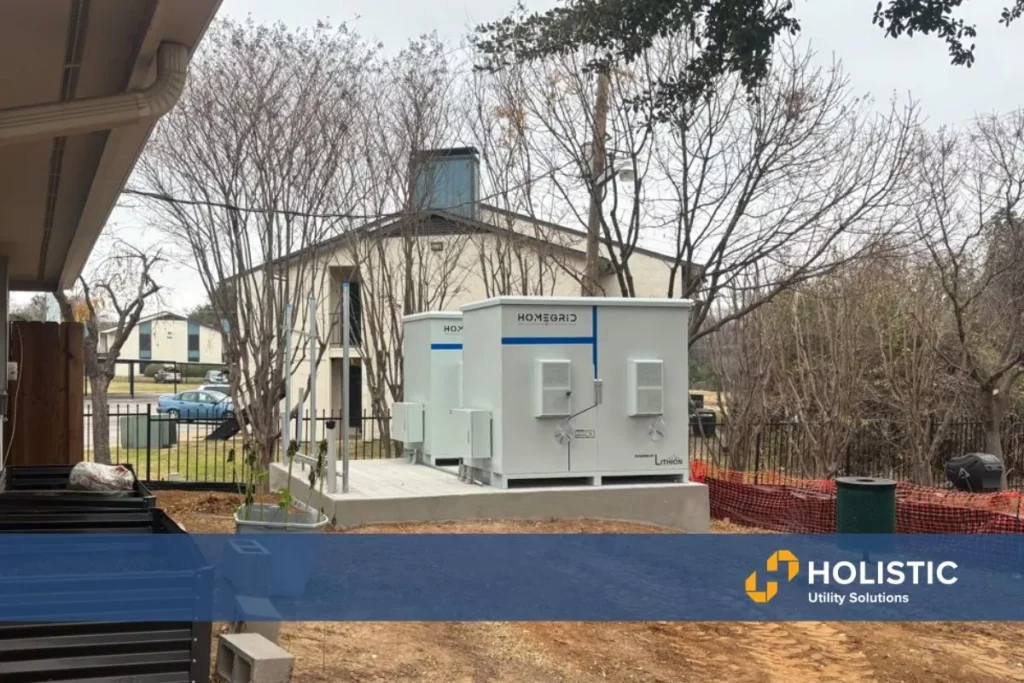
These innovative projects leverage solar + battery energy storage systems (BESS) to provide 24-hours of backup power to the Learning Centers at the Shadow Brook and Sleepy Hollow communities.
Historic energy data was utilized to determine the optimal BESS size and solar was maximized through addition of a shade structure that supported nearly 10KW of solar in addition to what the roof area could provide.
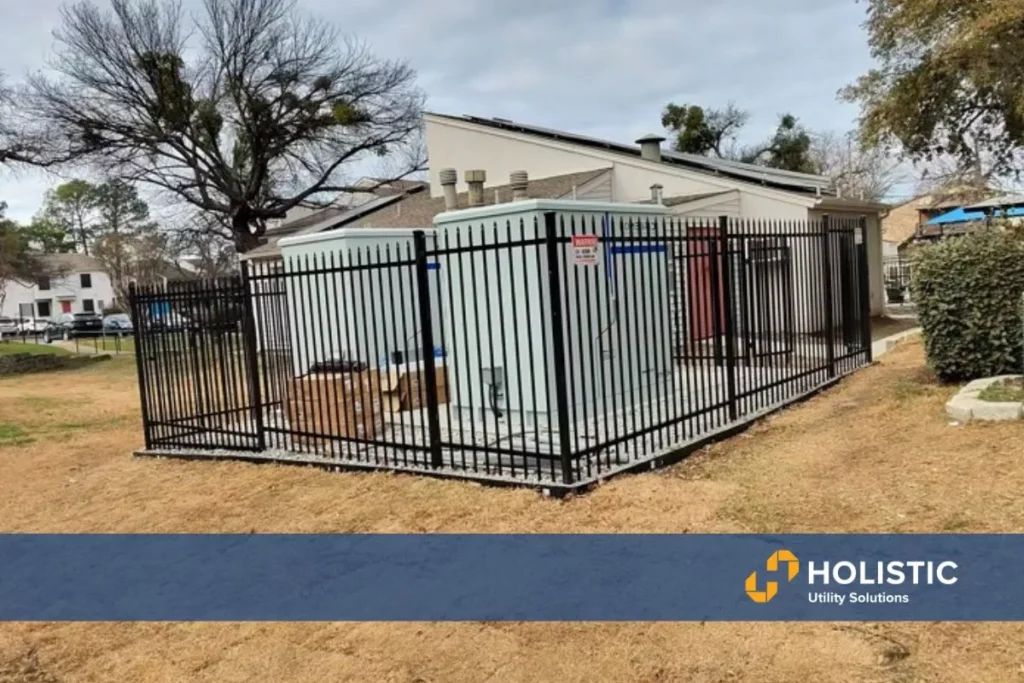
Manufacturer partners on the project included SolArk, who provided four (4) 15k hybrid inverters at each site. These were paralleled to support approximately 30KW of solar and two (2) fully stacked HomeGrid Cubes with 307kWh of BESS capacity at each location.
Placement of the system was carefully navigated to respect the various setbacks from the City of Arlington and utility easements in the area. Site surveys and civil engineering was subcontracted to ensure proper drainage and structure for the concrete pads and overall area.
Result
Despite a few challenges due to lead times and design difficulties, projects were successfully finished in early-2026 in time for an opening celebration on March 3, 2026. Multiple stakeholders from around the nation attended to see the project and learn more about the future of resiliency.